Every Friday, I break down real meteorology job postings and cover what the role actually involves, what employers are really looking for, and how to position yourself to get hired. Experience in energy, aviation, agricultural commodities, transportation, outdoor recreation, and event forecasting. Free, every Friday
The Friday Job Report - Week 22
|
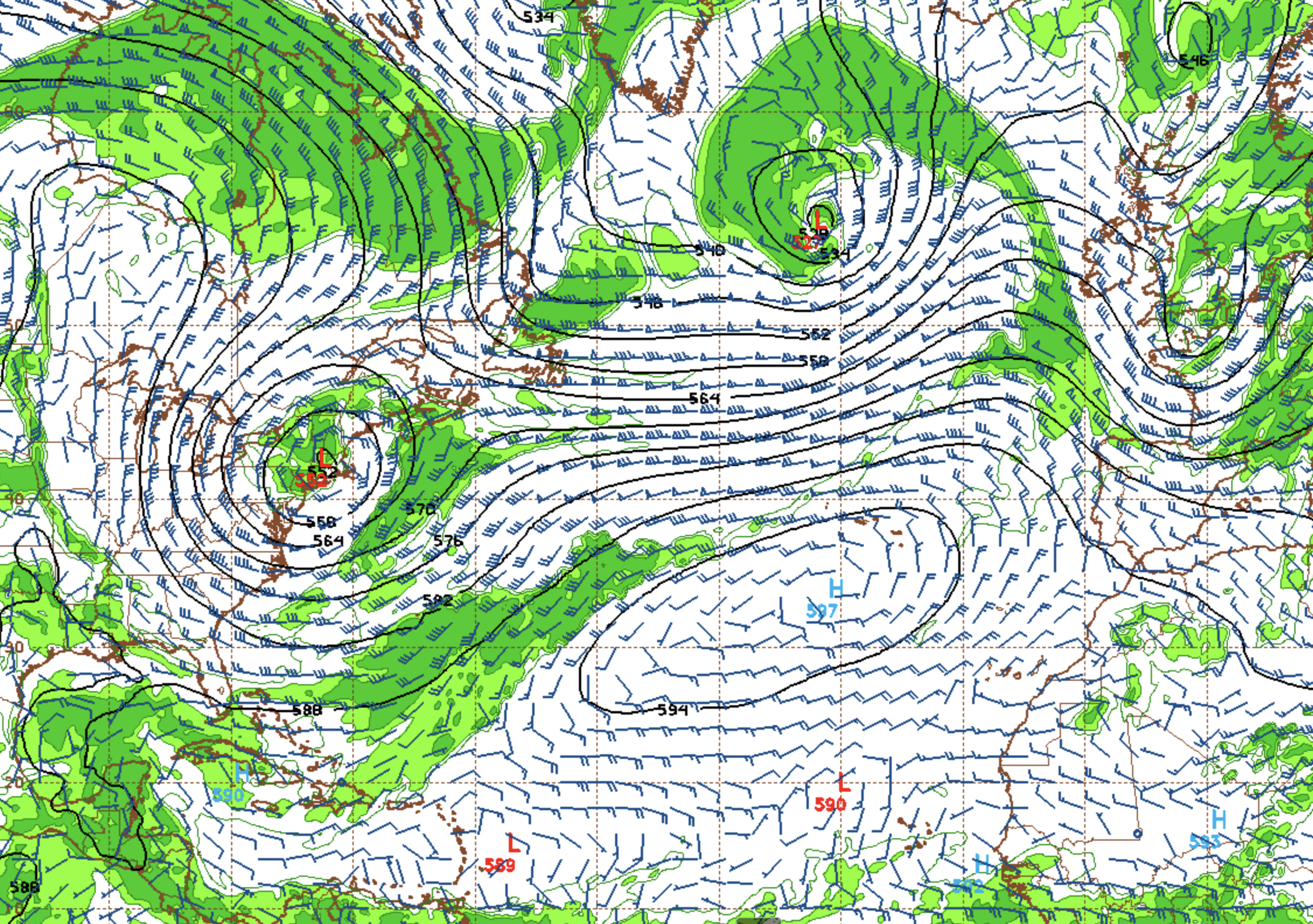
Issued on the 29th of May, 2026 One of the biggest mistakes you can make in an interview is not providing an answer. As a hiring manager and an interviewer, I observed this firsthand when people would get nervous and forget everything, and not be able to pull it together and provide some sort of answer. The worst thing you can say is, "I don't know". A big part of the interview is the interviewer learning how you handle adversity or things not going your way, and so using the "I don't know" answer kind of ends your chances right there. All the work you did to get there, right down the drain. When I would ask questions about 500mb patterns, I didn't even care about the answer. I only wanted to see how people answered the question, on camera, and the number of people that seemed to completely fall apart and not be able to even come up with anything was surprising.
In the image above, a very broad question could be tell me what is going on at the surface based on the image above. Or they could ask you to point out the key things, or where the low-pressure centers would be in 24 hours. If you were in agriculture or energy, you could be asked what the single most important thing to focus on is in this image. The answer would be completely different than a question about an aviation forecast at a given airport. Even if you don't know, you should think it through, because likely the question is something you might have to do in the job, and you might do while working on your own, and have to figure it out. The last thing the employer wants is a meteorologist who leaves the customer hanging, especially in small companies that can't afford to lose any clients. Before you go into an interview, you should develop some sort of process for handling any sort of question, breaking it down, and then working out the answer. At least give yourself the best chance. The JobsUSA JobsIndustry: Wildfire Title: Meteorologist Company: Hawaiian Electric Work Location: Honolulu Pay: $99,900 - $127,500 USD per year Benefits: See Job Listing Degree:
Years of Experience:
Key Skills or Knowledge: (most important to the company)
Who Should Apply? This job has been reposted for the last 6 months, which could mean they are not finding the right candidates. If you are the right person, you might be able to get the higher range listed or at least negotiate. After the devastating Maui wildfire, there was likely a lot of pressure put on to create a better approach to assessing risk and predicting conditions favorable for wildfires. While the environmental conditions present during the fire were unique, they were not, in my opinion, all that abnormal during a wildfire in a location near an ocean. About the Location Hawaii as a vacation is great. I've never been, but I know people who have, and I know people from Hawaii, and so I know that living there can be very costly. It's an island. Most things must be shipped to the island, and as I learned after living on a non-tropical island, if the ship doesn't sail, you don't get your goods. For the right person, this is a great job, and if you can make it work, go for it. Industry: Insurance Title: Catastrophe Modelling - Climate, Nature & Social Risk Executive Director Company: JP Morgan Work Location: New York, NY Pay: $175,760 - $260,000 per year Benefits: See Job Listing Degree:
Years of Experience:
Key Skills or Knowledge: (most important to the company)
Who Should Apply? This is for someone with significant experience in climate insurance risk management. You will be an expert on catastrophe modelling and could teach another person with no knowledge what this is, which model to use, and how to set one up. This is sort of a tangential posting. I think that people who have spent their career in insurance risk would gain the experience to apply for something like this, and maybe a few other candidates with unique advanced degrees, like an economics or mathematics, and an atmospheric / climate Master's or PhD. These types of jobs rarely show up in meteorology job postings and are more something you would find by searching "climate risk". International Jobs (Outside the US)Industry: Energy - Marine Title: Senior Metocean Specialist Company: Skyborn Work Location: Hamburg, Germany - Hybrid Pay: None given Benefits: See Job Listing - 30 days of vacation to start. Take that, America. Degree:
Years of Experience:
Key Skills or Knowledge: (most important to the company)
Who Should Apply? This is a renewable energy company building offshore wind farms, so technically, you would be working in energy, but using your marine background and experience to analyze ocean and boundary layer conditions as they relate to siting and operating wind turbines. Sounds like a pretty good opportunity if you want to live in the EU and Germany. Industry: Computer Science Title: Meteorologist Company: KIT Work Location: Germany Pay: €65,000 - €82,000 per year Benefits: 30-days of vacation + more Contract: 5 years Degree:
Years of Experience:
Key Skills or Knowledge: (most important to the company)
Who Should Apply? If you are a PhD with a computer programming background, love Germany, or want to work in Germany and it seems develop additional research at the forefront of weather predictability and build your own profile, this is the job. Industry: Operational Meteorology / Management Title: Head of Forecast Company: GeoSphere Work Location: Austria Pay: €69,204 per year starting Benefits: 30-days of vacation + more Degree:
Years of Experience:
Key Skills or Knowledge: (most important to the company)
Who Should Apply? This job has been reposted at least 2 other times. This is likely due to them not finding the right candidate. The reason for not finding the right person could be due to a lack of good candidates, or they have a very narrow view of who is the best candidate. This is a position where you are the leader of the whole team, and you make sure everything works properly, ensuring quality and knowledge of the forecasting within the staff. If you want to get into leadership, this could be a good job for the right person. Regardless, they are well known for their lagers, and they are right up against the eastern end of the Alps, meaning a lot of summer and winter activities for people who enjoy the outdoors. Industry: Marine Title: Weather & Route Optimisation Specialist Company: Gale Force Work Location: Sweden Pay: None Listed Benefits: See Job Posting Extra: Must have the right to work in Sweden Degree:
Years of Experience:
Key Skills or Knowledge: (most important to the company)
Who Should Apply? Since I have held this exact type of job, but at a different company, I can provide some insight about what you will do, although every company is different. The team is small and experienced, with the founder having 35 years on the ocean as a mariner. The head of operations is the lead meteorologist with 18 years of experience, also a good sign. The type of role is designing shipping routes from one port to another, and often moving people or large cargo shipments. The ports can be across oceans or on the same continent. You could be designing the entire route with fuel and security considerations in addition to the weather, or you could also just be providing weather information. In my experience, there wasn't as much forecasting as I was hoping, and more just knowing a lot of information about shipping logistics and maritime rules, so this should be something you have a lot of interest in as well. Industry: Energy Title: Meteorology and Climate Researcher Company: Hydro Quebec Work Location: Montreal, Quebec Pay: $70,239.26 to $144,372.80 CAD per year Benefits: See Job Listing Contract: 2 years Degree:
Years of Experience:
Key Skills or Knowledge: (most important to the company)
Who Should Apply? It is important to understand the need to be able to speak French. Once upon a time, I worked with clients in New Brunswick, Canada, one of the other bilingual provinces in Canada, and I had to speak in French to a client, but I didn't know French. This was before an app on your phone could translate, and so I used a cheat sheet, and you can imagine how that sounded. The other thing is that you should understand the weather they get in this part of Canada. Freezing rain is common, and the weather pattern that leads to freezing rain can be really obvious with a low-pressure system, but also not at all obvious with trapped low-level moisture or moisture advection from the Great Lakes, Hudson Bay, or the St. Lawrence River and high pressure in place. This can also be the reason for low clouds. While freezing rain is bad for power lines, the clouds can reduce solar. It can be very cold in Montreal, so make sure you enjoy ice skating, ice fishing, or just being really cold. Final Thoughts I will start posting some jobs in the report that are in climate because, in lean job prospect times, many people could get a bridge job in climate risk, climate resiliency, climate sustainability, or climate change policy. Many of you may look away in disgust at not forecasting or at least doing something specific in meteorology, but I think many others have advanced degrees that can, if needed, cross over into environmental science, finance, law, urban planning, or GIS. If you go into a browser and search for Climate Risk Jobs you will get hundreds of results back. You will have to refine this list to meet your qualifications, but if you have been laid off and need a filler until you find a job you really want, or maybe you are interested in transitioning out of meteorology into more climate + another industry, there are many, many more opportunities. Trust me, even when you get your foot in the door and get an interview, you have a big hill to climb. I had some non-meteorology interviews when I was laid off, and I performed poorly because, on paper, it was easier to connect the dots, but with an actual person, it was much harder to explain why I could be a good hire. If you haven't used it, Haby Hints is a great free resource for understanding the atmosphere. Good luck on the job search! |
Scott Patterson
Every Friday, I break down real meteorology job postings and cover what the role actually involves, what employers are really looking for, and how to position yourself to get hired. Experience in energy, aviation, agricultural commodities, transportation, outdoor recreation, and event forecasting. Free, every Friday