Every Friday, I break down real meteorology job postings and cover what the role actually involves, what employers are really looking for, and how to position yourself to get hired. Experience in energy, aviation, agricultural commodities, transportation, outdoor recreation, and event forecasting. Free, every Friday
The Friday Job Report - Week 21
|
Issued on the 22nd of May, 2026 An interview is just a conversation with someone you've just met, and your one job is to be interesting enough that they want to keep talking to you. Most first-round interviews are video calls, with some small firms using a phone call, but this is becoming less and less normal. Although I have had some HR recruiters use a Zoom or Teams call with no video, just audio. On the call, the host will let you know the structure of the call and start with a background about the company and the position they are filling. This takes about 10 minutes. Following this, they launch into their questions. The other way is they just launch into the questions, but it's more conversational, and they may weave the background of the position into the conversation or add it at the end. Top questions I've received from this first interview.
What I've found is that the best interviews have been conversations and not just question, answer, quiet while I wait for the next question. However you do it, you need to see the person you are talking to as an acquaintance, with whom you would speak properly, no slang, but with whom you can easily have a conversation. Tell Me About Yourself - Don't tell me your life story or verbalize your resume. As the interviewer, I want you to connect your experience to my position and how your background would make you a good fit, but I want you to do this in about 2 minutes. Don't be afraid to turn it into an actual conversation, like you already work with this person, and you ask them questions. Does that Sound Good? - After they explain the company, you can ask questions. You don't have to say yes. Why Do You Want to Work Here? - I'm not going to go into advice you can find online, but you should have a good answer that shows you did some research and have some deeper reason why. Again, make a connection between yourself and the company. Just make sure you write out all the possible interview questions, write down the answer, and practice it verbally while changing how it flows to make it fit the conversation. And as always, if you want to learn more about interviewing, resumes, or cover letters beyond what I list in the Friday Job Report, Next week, I will talk more about your interview answers. The JobsUSA JobsIndustry: Insurance Title: Catastrophe Portfolio Modeling Manager Company: AIG Work Location: Chicago, IL Pay: $120,000 - $150,000 USD per year Benefits: See Job Listing Degree:
Years of Experience:
Key Skills or Knowledge: (most important to the company)
Additional Skills
Who Should Apply? You should already have insurance or re-insurance experience with a strong data background. While this doesn't specifically say atmospheric science or meteorology, the skills you would have with a data background would likely give you the right type of skills for this role. You should not want to forecast because this is about data science, analytics, and modeling. This could be a good fit for the right, specific senior-level person. About the Location This job is very likely located in downtown Chicago, which is right up against southern Lake Michigan. Millennium Park, where they host a variety of concerts and festivals, is right next to downtown. There is a river right through downtown with a river walk that wraps around downtown, and many nice restaurants are right along it. North of the river is River North, and then the Gold Coast heading toward Lincoln Park. There is a trail that runs from the Science Museum northward for about 10 miles and is great for runs or walks before or after work. Some people even swim or play water polo in the lake. Industry: Energy Title: Senior Meteorologist Company: Avangrid Work Location: Portland, OR Pay: $96,400 - $120,500 Benefits: See Job Listing Note: ATS-Likely Closing Date: 12th of June 2026 Degree:
Years of Experience:
Key Skills or Knowledge: (most important to the company)
Who Should Apply? If you want to work at a global company that has been around a while, under different names, but generally associated with renewables, then this is that job. This job is not forecasting the weather, but instead siting renewables by visiting potential sites and modeling renewable facilities. There are many considerations when siting wind or solar facilities, with vastly different considerations for each. For wind, you must think about the terrain, such as mountains and the ocean, and the flow of wind caused by each. Then there is the farm itself and interference from another wind farm or from another turbine. Solar is a little easier, but not a given, and there are considerations there as well. There are a few companies that hire for this, so if this is the sort of work you want to do, you can reach out, and I will provide the other company names. About the Location Portland has had its ups and downs, but overall, I love visiting. In 2014, on July 4th, I visited Portland for the first time. As you know by now, I love hiking and the outdoors, and with Mt. Hood and the Columbia River Gorge right there, hiking trails are abundant. I also like to find waterfalls, and there are many around Portland and in Oregon. Then you have the coast with the cliffs, huge rocks rising out of the sea, and the tide pools. I've always enjoyed ice cream, and I have my favorite shops around the US. In Portland, there's Salt & Straw and their strange flavors, although they used to have bone broth flavor, and that's just weird. There is another ice cream maker nearby in Tillamook, in case you want a more national brand.
The second and 3rd time I visited was while living in Seattle, so it was just a short drive south. Then the 4th and 5th times, I hiked all over the volcano region, out by Bend, and went to Crater Lake. Portland is not cheap, so factor that in if you don't live there or nearby. Also, you can't pump your own gas or petrol. An attendant has to do it, according to state law.
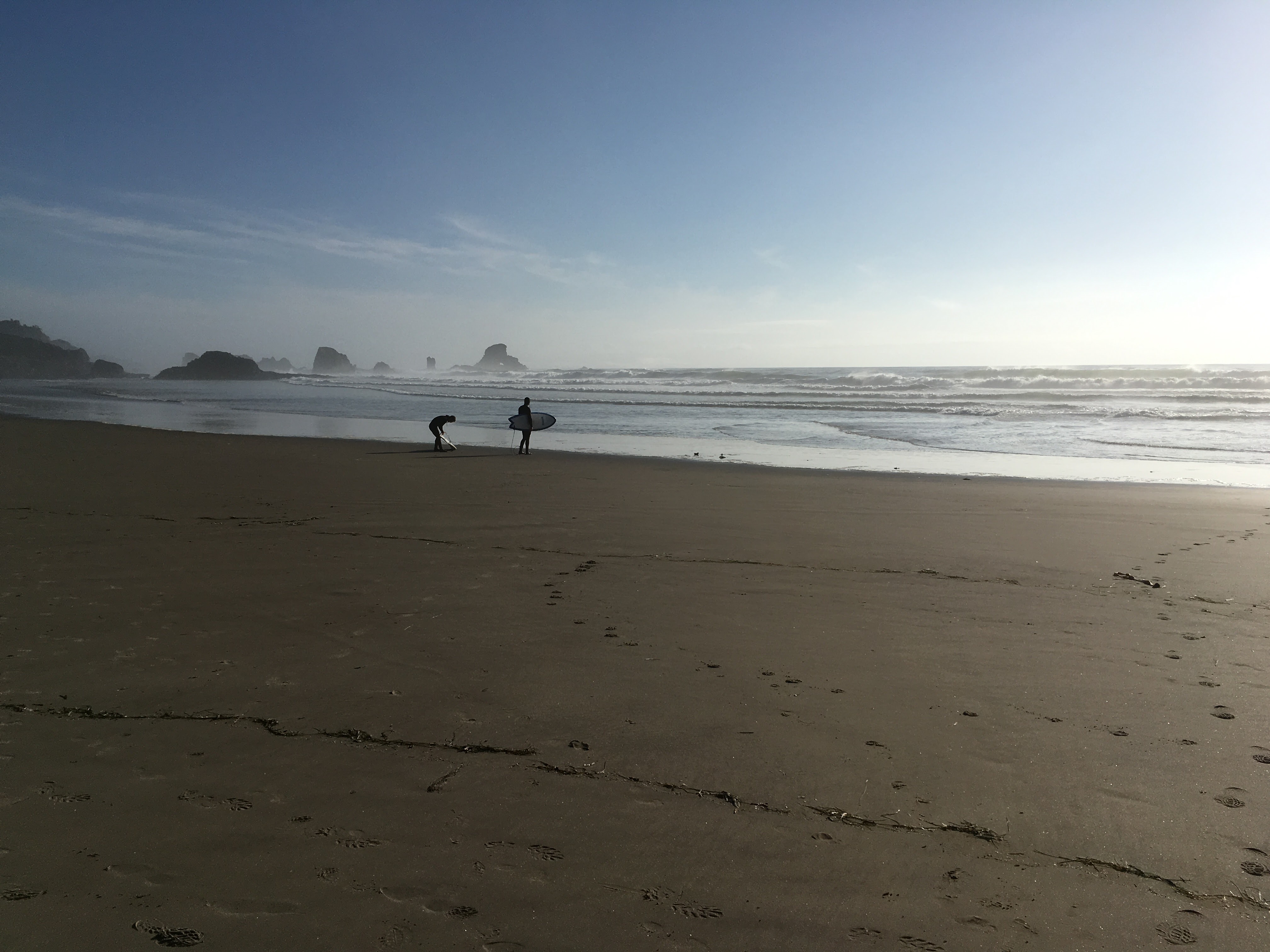
The weather can be gloomy with a lot of rain and low clouds in the winter, and sometimes really bad freezing rain. Plus, the threat of wildfires in some years. But as you can see above, they do have sun. International Jobs (Outside the US)Industry: Energy Title: Energy Trading Meteorologist Company: Statkraft Work Location: Düsseldorf, Germany Pay: None given Benefits: See Job Listing Degree:
Years of Experience:
Key Skills or Knowledge: (most important to the company)
Who Should Apply? If you already work in energy trading, especially in the US or Europe. If you are in the US, it does help to have an understanding of the difference between the US and Europe's energy infrastructure. Europe favors renewable energy more than the US. I interviewed for this company for a different position in a different city, and I think my lack of coding background was a big sticking point. So, as the listing says, the first thing you would be doing is building data flows, which means you should know how to do this using your experience in Python. You would also be working with traders to understand the intraday and next-day patterns, so you are going to need to understand European patterns, teleconnection patterns, and basic geography. You should have a good grasp on how a -NAO pattern effects Germany solar production, or how westerly flow off the Atlantic changes renewables, especially in wind power in the North Sea, and the weather pattern that causes arctic air to surge southwest from Russia back into Europe, bringing snow to higher energy demand. These are just a few of the many ways your weather knowledge is going to be used. Industry: Hydrology Title: Flood Data Scientist Company: ICEYE Work Location: Finland or Spain Pay: None given Benefits: See Job Listing Degree:
Years of Experience:
Key Skills or Knowledge: (most important to the company)
Who Should Apply? There will be 5 rounds of interviews for this position. I have interviewed for this company and can confirm they will stick to the number of rounds, and you may have to create a project or take a test on one or more rounds. You love snow, cold, and dark, and want to live in Helsinki. Or you hate cold, snow, and dark and want to live near the beach in Valencia, Spain. If you live here, you can help determine better ways to manage the flooding they have, which, if you've seen the news, involves cars floating down steep roads in between buildings on the way to the ocean. This is technically a startup, and so the culture of a startup, where you work hard in different positions, is what you should expect. If you are cool with this type of expectation, then the job sounds really interesting and one where you would get to apply your knowledge of hydrology to real-life scenarios. Not a forecasting job. Final Thoughts I touched on this idea earlier this week about ATS resumes and non-ATS, and I wanted to go over this more. I don't create resumes to fit the ATS (Applicant Tracking System) ideal because most meteorology jobs are small businesses or flat organizational structures and don't even have an HR department. Companies, such as Avangrid, that are using Workday may be using ATS because Workday uses ATS. Other sites that use ATS are BrassRing, Lever, Greenhouse, and more. Even considering this, I have in the past applied for several companies through Workday and landed interviews. The only way I think you can determine is if it is a big company that hires for many positions, they would have the money to spend on an application tracking system. When I create my resumes, instead of using a 1-column format, I focus more on readability by having sections and whitespace, as you might see in a magazine or on a blog. I've had great success doing this, and so for me, I've really never even thought about ATS. I think it comes down to your qualifications more than anything, and for most meteorology jobs, you are not going to miss out because ATS sorts your resume right into the trash bin. If you haven't used it, Haby Hints is a great free resource for understanding the atmosphere. Good luck on the job search! |

Scott Patterson
Every Friday, I break down real meteorology job postings and cover what the role actually involves, what employers are really looking for, and how to position yourself to get hired. Experience in energy, aviation, agricultural commodities, transportation, outdoor recreation, and event forecasting. Free, every Friday