Every Friday, I break down real meteorology job postings and cover what the role actually involves, what employers are really looking for, and how to position yourself to get hired. Experience in energy, aviation, agricultural commodities, transportation, outdoor recreation, and event forecasting. Free, every Friday
The Friday Job Report - Week 20
|
Issued on the 15th of May 2026 Yay!!!! You were invited to an interview. Now what? All that work, all that time sending out hundreds of resumes and cover letters. You finally found a way to break through. You can't blow it. Now is the time when you are going to start searching for all the possible questions the interviewer may ask you. Then you are going to cram as much as you can into your head. I can't tell you not to do this, but after doing over 40 interviews since July 2024 and many more throughout my career, I can give you some advice based on what has worked for me. How you interact with people, how you decide what to say, when to say it, how you hold your head, where you look, what you do with your hands, and how much weight you put on certain words will be different for each person. I can share my advice, and you can apply it to your own habits, methods, and processes to create the best version of you. Topics
I will discuss #1 in more detail next week, but as an introduction, think of a time, maybe at a conference, at church, at a wedding, at a friend's potluck, or your spouse's company holiday party, where someone asked what you do for a living. You then wow them that you are a meteorologist and you predict the weather. This is how you answer interview questions. You are explaining to someone you don't know what you do, and in doing so, you don't want to talk too long because it's called small talk for a reason. If you can take this concept into the interview, that you kind of want the interviewers to be impressed by what you do, but you don't want them to nod off, then you can come across as a good candidate to make it to the next round. This is a lot easier said than done, but if you practice, you will become so good at using this concept that it won't even faze you going into the interview. Next week, I will talk more about this first concept with more advice and tips. The JobsUSA JobsIndustry: Energy Title: Wildfire Meteorologist Company: AEP Work Location: Austin, Texas Pay: $97,000 - $124,000 USD per year Benefits: See Job Listing Closing Date: 17th of May, 2026. Degree:
Years of Experience:
Key Skills or Knowledge: (most important to the company)
Who Should Apply? Once again, wildfire jobs are in demand across the United States. Wildfire forecasting is really just about applying knowledge of how the weather influences wildfire behavior and pre-fire conditions to fire-prone regions, or in this case, to the utility's operating region. While you may not think about it, in 2011, the largest wildfire in Texas history occurred in Bastrop, which is east of Austin. 2011 was a year with extreme drought and heat in Texas, and near the time of this fire area (3 fires combined), the temperature was 101 °F / 38 °C, and there were dry Northeast winds around a tropical storm in the Gulf of Mexico. One of the fires started due to downed power lines, which can be brought down by fallen trees. The trees in parts of Texas are Loblolly pines, which, if you've never seen them (I grew up around these), grow over 100 feet / 30 meters high, and so when they fall, they can easily fall across a cleared area where power lines run. The utility tries to keep these clear, but sometimes there is not much else you can do, especially in remote areas. Another fire started from another tree falling on a line, and the third fire started from a tree falling against a line. 3 fires started due to power lines, and these fires merged into a huge fire, driven by winds from a tropical system (like in Maui), hot temperatures, and dry fuel (vegetation). Austin is surrounded by all kinds of trees and bushes, but there are a lot of highly flammable juniper bushes. This type of vegetation can be found in a lot of Texas, and for this reason and others, AEP is interested in having experts who can predict favorable fire weather conditions. If this is you, and you want to live in Austin, which, despite being at risk of a fire, is also a fun place to live and visit, then you should apply. About the Location Austin gets a bad rap from people these days because it is full of tech transplants from California, who have driven up the prices for homes, just like they did in California. However, if you are willing to live outside the city center, it can be somewhat affordable. If you do make it there, where to start? Since I love the outdoors, as you know or can see, Texas can be very hot in the Summer. While it can be humid, it is not like Houston or a more tropical location. Thankfully, one thing Austin is blessed with is natural cold springs. Barton Springs Pool is right in the middle of the city, where the water remains 68 °F / 20 °C to 74 °F / 23 °C year-round. People, wearing a wetsuit, do swim in the Winter. The pool is huge and about 18 feet / 5.5 meters deep with plants growing on the bottom. I can tell you on a 105 °F / 40.5 °C day, it feels like you are in Portugal, jumping into the Atlantic. Freezing. But refreshing.
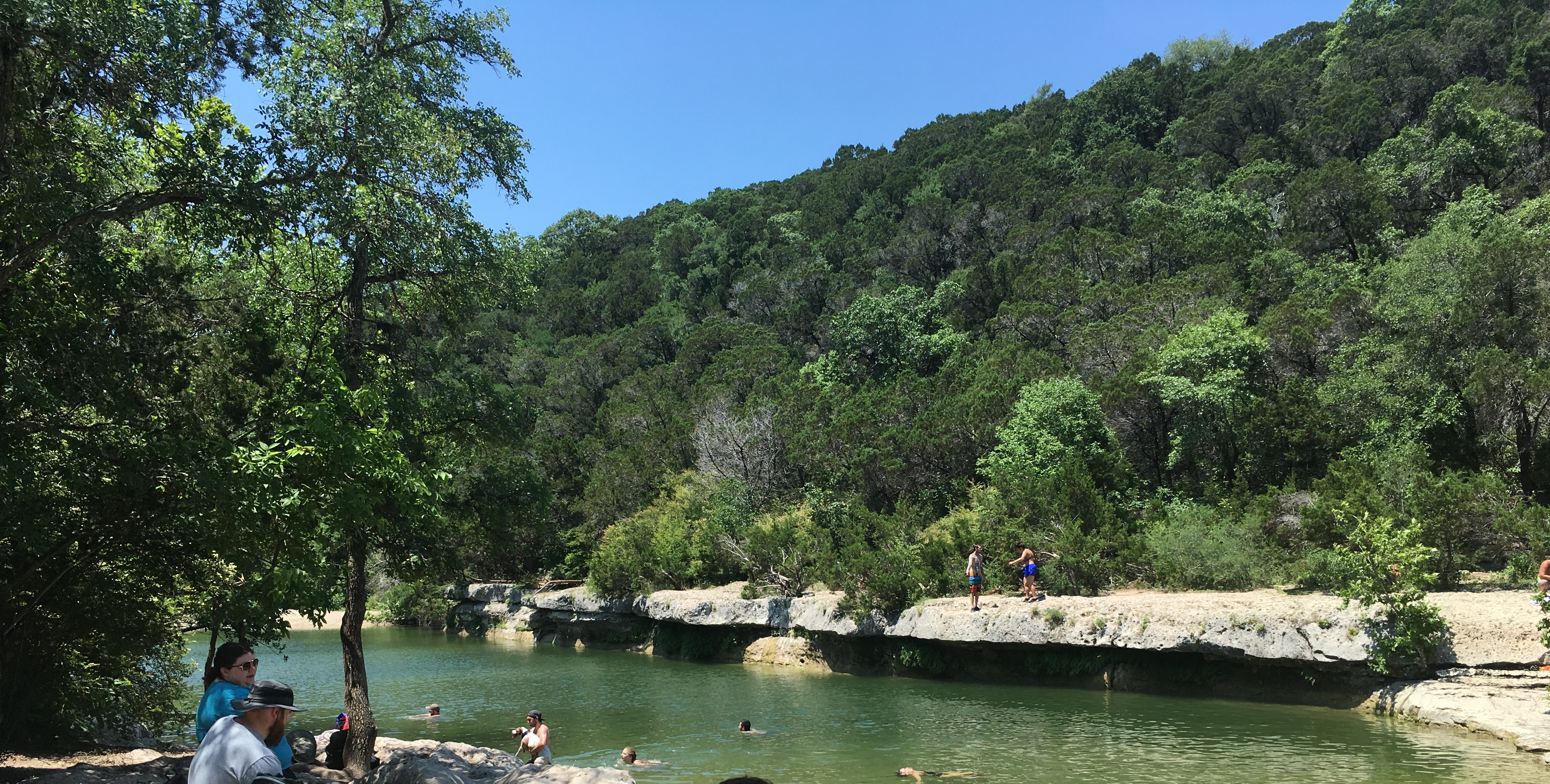
From the pool, you can walk north to Lady Bird Lake, which is really just a dammed portion of the Colorado River. On the south end is Zilker Park, where Barton Springs is, and on the north shore is downtown Austin. If you travel to the West, there is a series of lakes heading into the Hill Country where there are vineyards, more cold springs, water skiing, and rock climbing. The Austin area is surrounded by things to do outdoors, good food if you like breakfast tacos or BBQ, and a lifestyle that involves spending time outside, like in Spain. Anyway, if not apparent, I enjoy Austin, and you could too. Industry: Risk Management Title: Meteorologist Company: AlertMedia Work Location: Austin or Remote in the US Pay: None Given Benefits: See Job Listing Shift: 2 pm - 12 am Central Time Degree:
Years of Experience:
Key Skills or Knowledge: (most important to the company)
Who Should Apply? If you live in the following states, you should not apply; they won't consider you. You should move to another state if you want to work for them.
Industry: Operational Meteorology Title: Meteorology Intern Company: Bam Wx Work Location: Indianapolis, IN area Pay: None Given Benefits: See Job Listing Degree:
Key Skills or Knowledge: (most important to the company)
Who Should Apply? Anyone finishing up school who wants to pivot right into a job. They are looking to turn the intern into a full-time position, possibly, so this could be the gateway to your first job, which can then create the experience needed to advance. This is a huge opportunity. About the Location Indianapolis is a medium-sized city known most likely for Indy car racing. Like similar towns of its size, there are the usual attractions and things to do. It is very flat, surrounded by farms, near Indiana University, and about 3 hours southeast of Chicago by car. It's a good place to live, close to other things, and it has a major airport to escape the cold in the Winter. International Jobs (Outside the US)Industry: Aviation Title: Surface Weather Observer Company: ATS Services Work Location: Montreal, Canada Pay: $20 CAD/hour Benefits: See Job Listing Degree:
Years of Experience:
Key Skills or Knowledge: (most important to the company)
Who Should Apply? Very similar to an internship, and the reason I posted this is that you could, with the right motivation, get yourself into an aviation meteorology forecasting role from this position. This role is not forecasting. You are the observer, and you actually hold a lot of power in how airlines operate, as some pilots are not experienced enough to fly in all types of cloud cover, which can cause flight cancellations. About the Location Montreal, I have heard, is amazing, and amazingly cold in the Winter. If you fancy the thought of ice skating outside on the city's canals and eating poutine, then Montreal is your place. Summertime looks like a lot of fun for exploring the city and surrounding areas or catching a concert. I was once hiking in the Adirondack Mountains, about 2 hours south of Montreal, and met several hikers from Canada, so there is always that. Final Thoughts One of the biggest things happening in my job is the upcoming El Niño and the influence it will have on global weather patterns. Regularly, in agriculture, I am asked to make forecasts as far out as November of this year, and to do that, I use a combination of known El Niño patterns, analog El Niño years, Sea Surface Temperature Anomalies, Teleconnections, and any other background information I may have gained through my career. Daily, I speak to customers and discuss model bias and weather forecasts for specific commodity crops and in different locations such as the US, compared to South America, Europe, the Black Sea, China, or Australia. While in other industries, you may occasionally touch on a different region of the World, I do this every day of the week. This means I have to have a strong knowledge of the different ways the patterns can shift based on changes in both ocean and atmospheric temperatures. This is what you gain from experience. While some people I work with are probably a lot more personable than I am, I'm really good at creating the picture for the customer so they understand how the weather will impact the crops they care about. Being able to break down the weather data in real time, while on a call with them, and explain it in layman's terms is key to being a good meteorologist. You are not often going to be given as much time as you really need to analyze weather data and provide a forecast solution. If you haven't used it, Haby Hints is a great free resource for understanding the atmosphere. Good luck on the job search! |
Scott Patterson
Every Friday, I break down real meteorology job postings and cover what the role actually involves, what employers are really looking for, and how to position yourself to get hired. Experience in energy, aviation, agricultural commodities, transportation, outdoor recreation, and event forecasting. Free, every Friday